New open-access research in Biological Conservation shows why species-poor wetlands are essential to plant diversity—and why conserving connected agricultural mosaics matters.
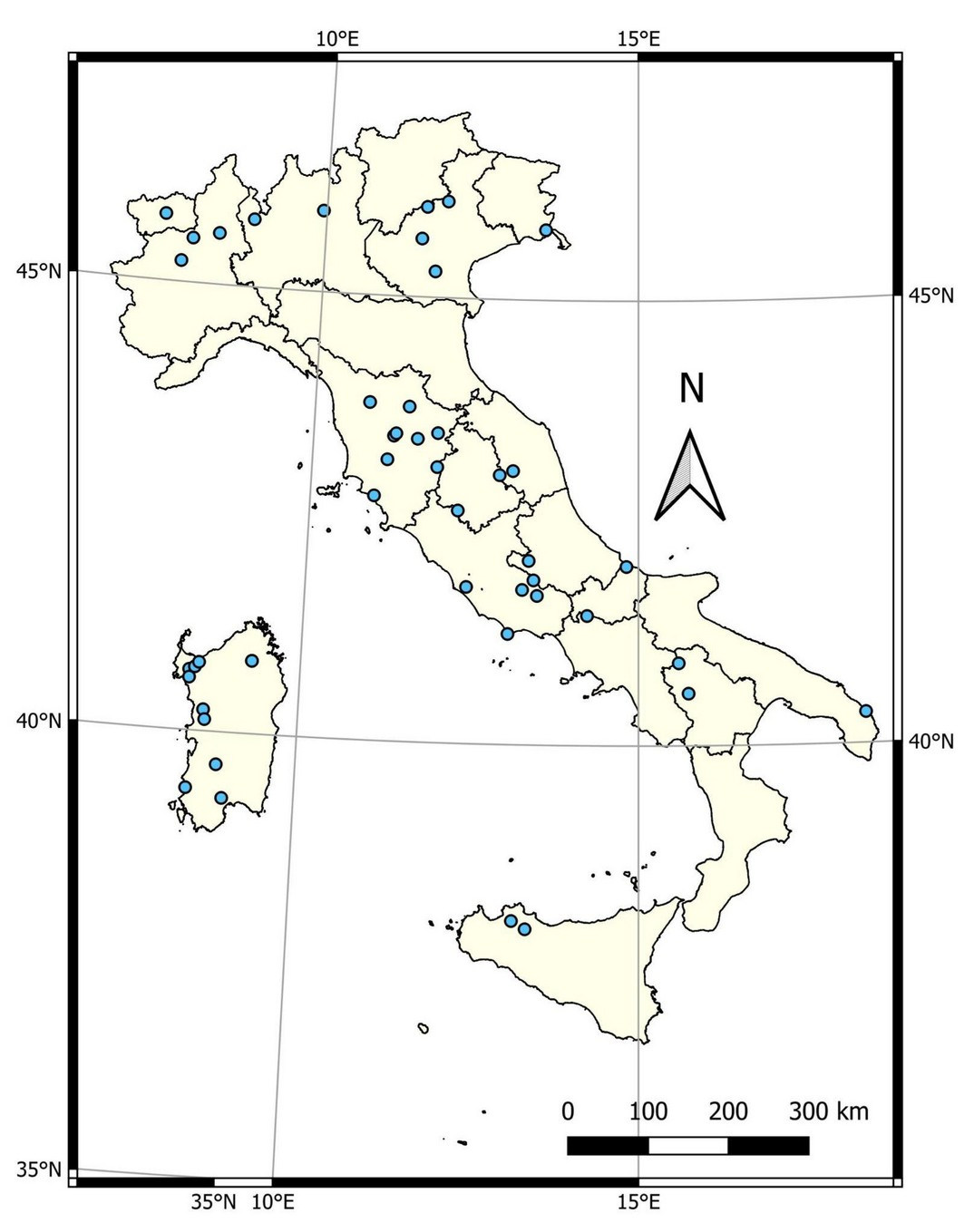
46agricultural study landscapes across Italy
230vegetation plots of 25 m² each
1,140vascular plant species recorded
5ecosystem types compared
Which habitats contribute most to plant diversity in agricultural landscapes? A new open-access paper in Biological Conservation, developed by a nationwide network of botanists and ecologists, shows that the answer depends on how biodiversity is measured. Wetlands often host relatively few plant species, yet their communities can be exceptionally distinctive. Protecting them is essential—but so is maintaining the full mosaic of habitats around them.
The study, led by Emanuele Fanfarillo with Claudia Angiolini and Simona Maccherini as co-last authors, combines field vegetation data and complementary measures of species richness, species uniqueness and beta diversity. The result is a national-scale perspective on the conservation value of plant communities embedded in farmland.
Five habitats, one interconnected landscape
Researchers surveyed croplands, grasslands, shrublands, forests and wetlands at 46 sites across Italy. At each site, botanists recorded vascular plants in one 25 m² plot per ecosystem type, yielding 230 comparable vegetation plots. The analyses assessed local species richness (alpha diversity), differences in species composition among communities (beta diversity), species restricted to particular ecosystem types, and red-listed or non-native species.
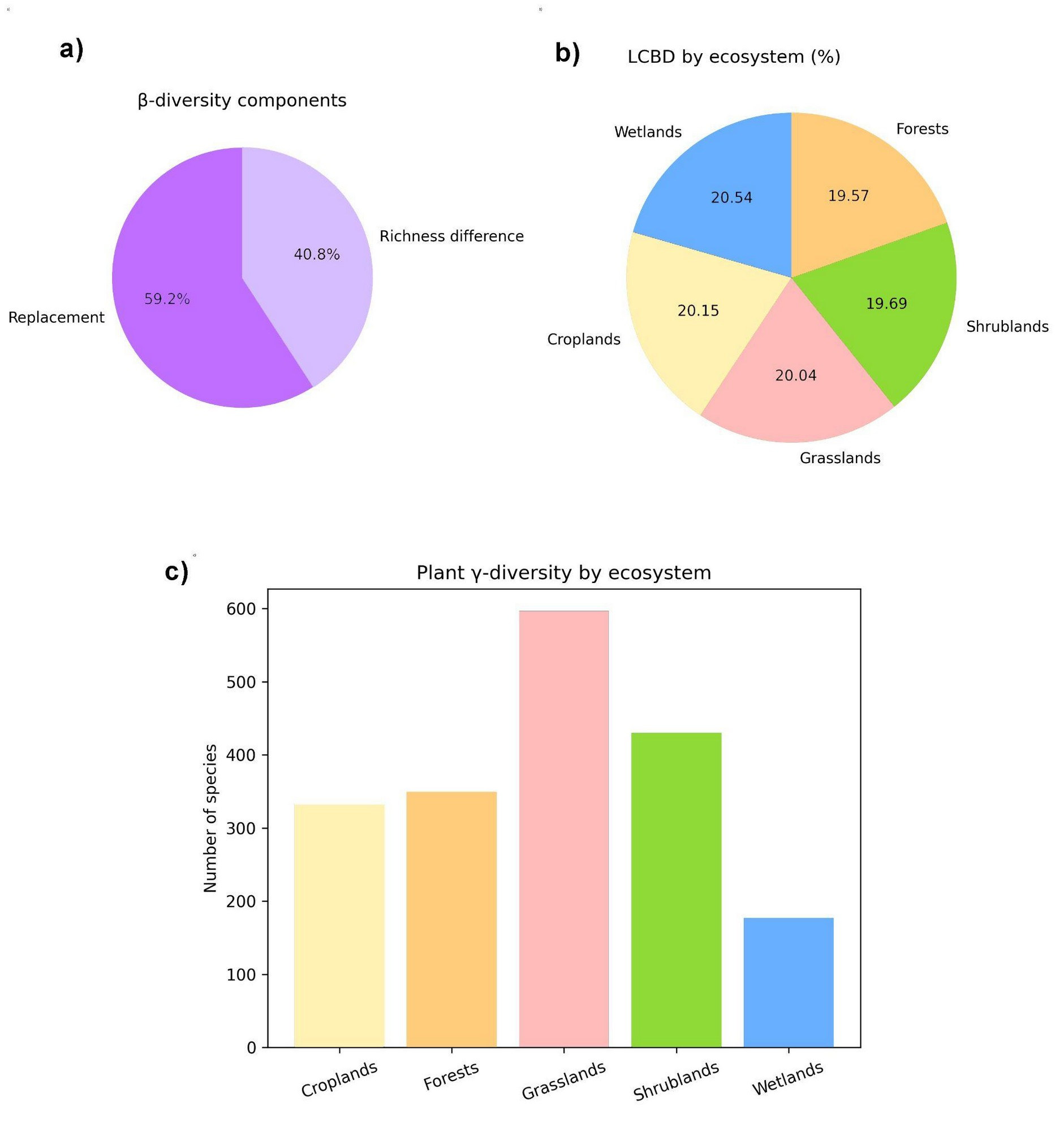
Across the entire dataset, 1,140 vascular plant species were recorded. Grasslands supported the greatest total richness (597 species), compared with 177 in wetlands. This contrast helps explain why counting species alone cannot capture the full conservation value of a habitat.
Why species-poor wetlands stand out
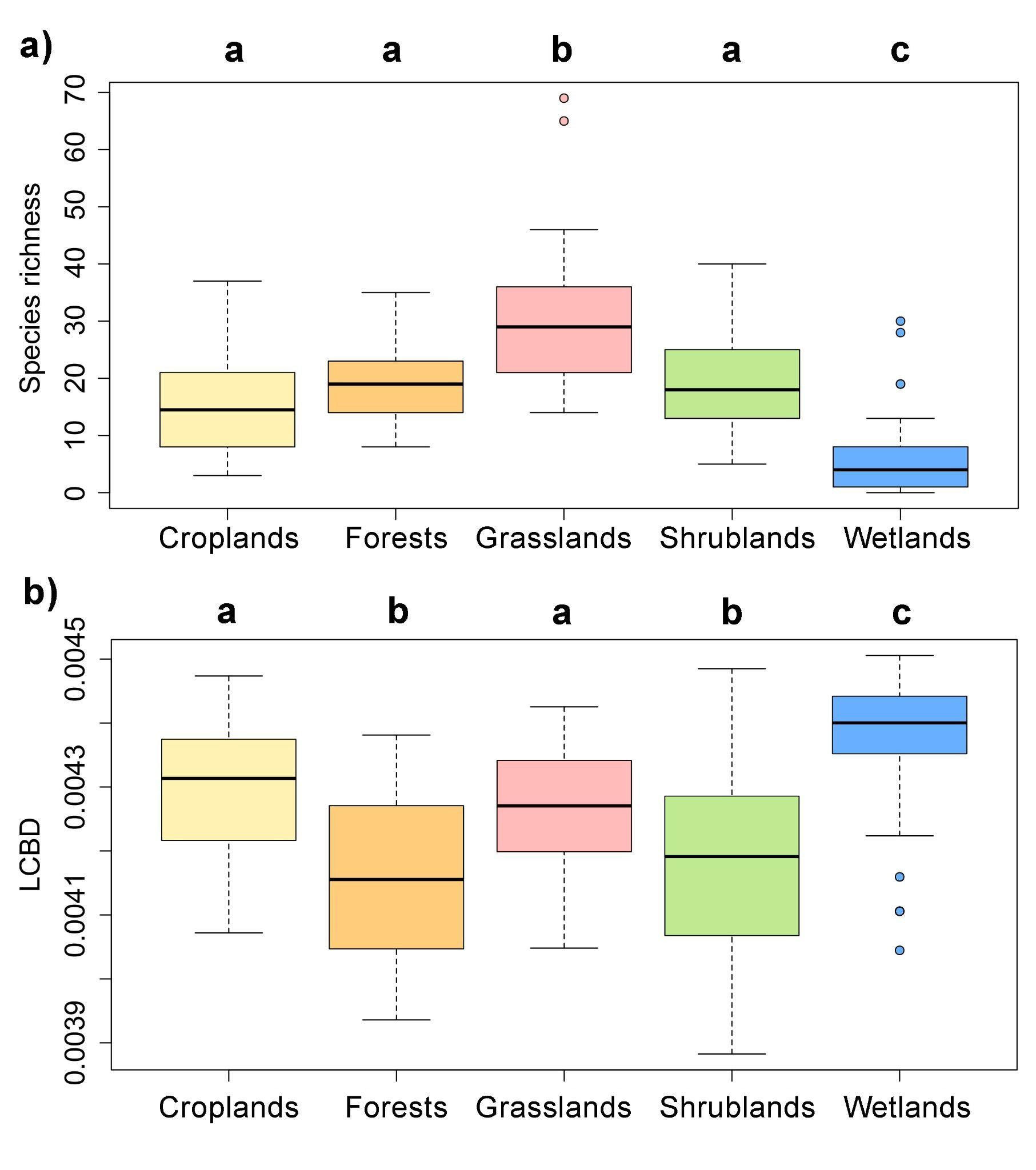
Grasslands were the richest habitats at the plot scale, averaging 20.9 species per plot, whereas wetlands averaged only 4.1. Yet wetlands had the highest mean Local Contribution to Beta Diversity (LCBD), a measure of how distinctive each community is within the complete dataset. Of 31 plots with significant LCBD values, 21 were wetlands.
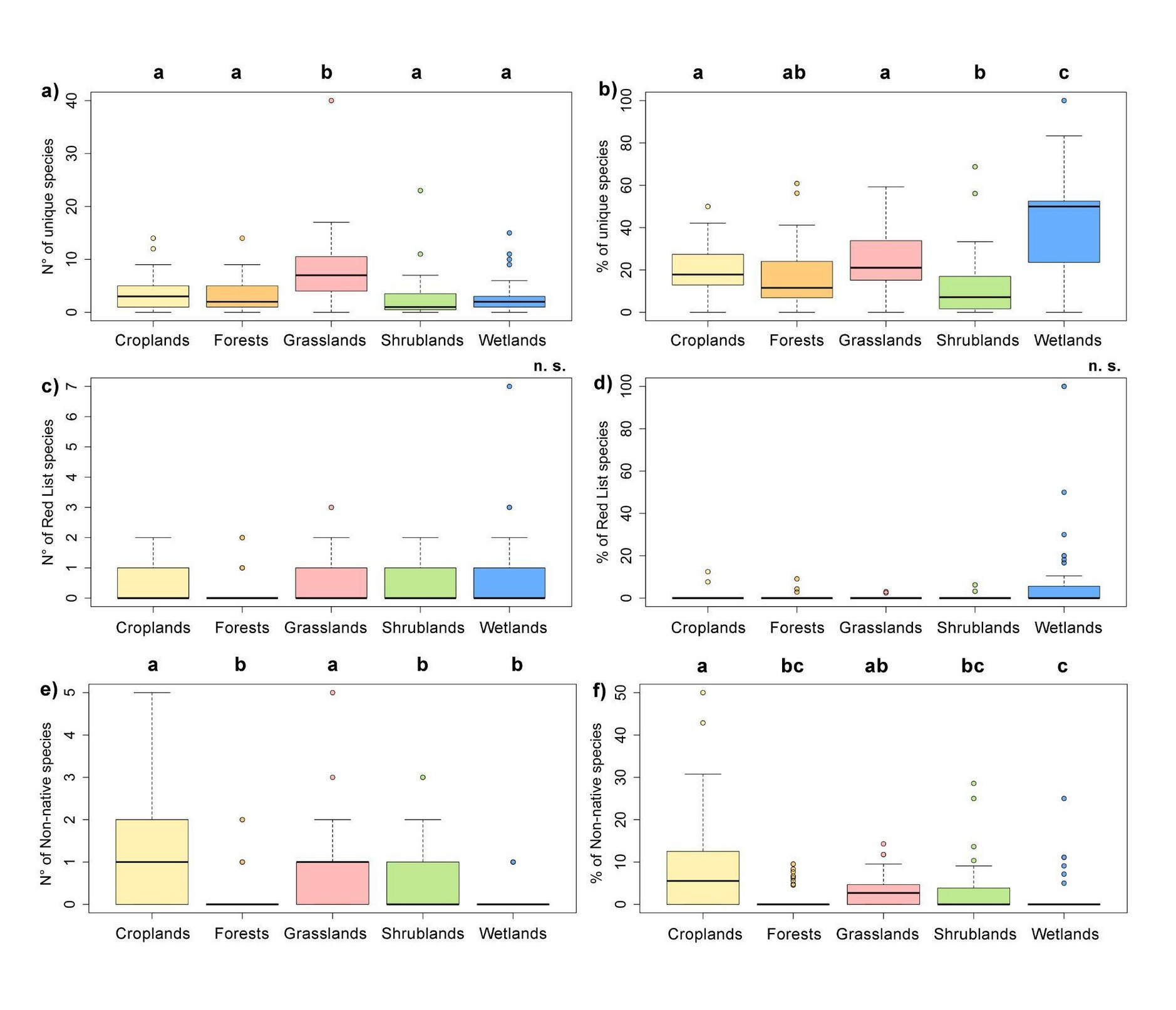
Wetlands also had the highest mean proportion of ecosystem-unique species. They tended to support more red-listed species, although differences in red-listed species among ecosystem types were not statistically significant. The key result is therefore not that wetlands are universally the richest habitats, but that they protect plant assemblages that would be difficult to replace elsewhere in the agricultural landscape.
The contribution of Biodiversity Lab and the Classical Karst
The University of Trieste contribution brought a local field perspective into this nationwide collaboration. Prof. Miris Castello contributed vegetation data from the Lago di Doberdò wetland in the Classical Karst of northeastern Italy, representing an ecologically distinctive wetland landscape within the national sampling network.
Within the collaborative analytical workflow, Emilia Pafumi contributed to the organisation, curation and interpretation of vegetation data, while Prof. Giovanni Bacaro contributed data integration and formal statistical analysis. This work connected the Biodiversity Lab at the University of Trieste with the Department of Life Sciences at the University of Siena and the research group of Prof. Simona Maccherini, alongside botanists and ecologists from across Italy.
A conservation message beyond wetlands
Although wetlands emerged as a priority for the distinctiveness of their plant communities, every ecosystem type made a complementary contribution. Grasslands supported the highest species richness and the greatest number of unique species overall; forests, shrublands and croplands also contained distinct communities that would be lost from a simplified landscape.
The practical implication is to conserve and restore connected mosaics of farmland, grassland, woody vegetation and wetlands rather than relying on a single habitat type. Recognising the complementary roles of these communities can inform landscape-scale conservation and agricultural restoration.
Visual evidence
Figures from the paper.
Selected figures from the authors’ accepted manuscript, reproduced with attribution. Open any image to view the full-resolution figure.
Figure 1 · Study areaLocation of the 46 study sites across Italy. Figure 1 from the authors’ accepted manuscript.Figure 2 · Complementary habitatsDifferent perspectives on beta diversity and total species richness show why all five ecosystem types matter. Figure 2 from the authors’ accepted manuscript.Figure 3 · The central resultGrasslands have the greatest local species richness, while wetlands have the highest mean contribution to beta diversity. Figure 3 from the authors’ accepted manuscript.Figure 4 · Unique and threatened plantsWetlands contain the highest mean proportion of ecosystem-unique species. Differences in red-listed species were not statistically significant. Figure 4 from the authors’ accepted manuscript.