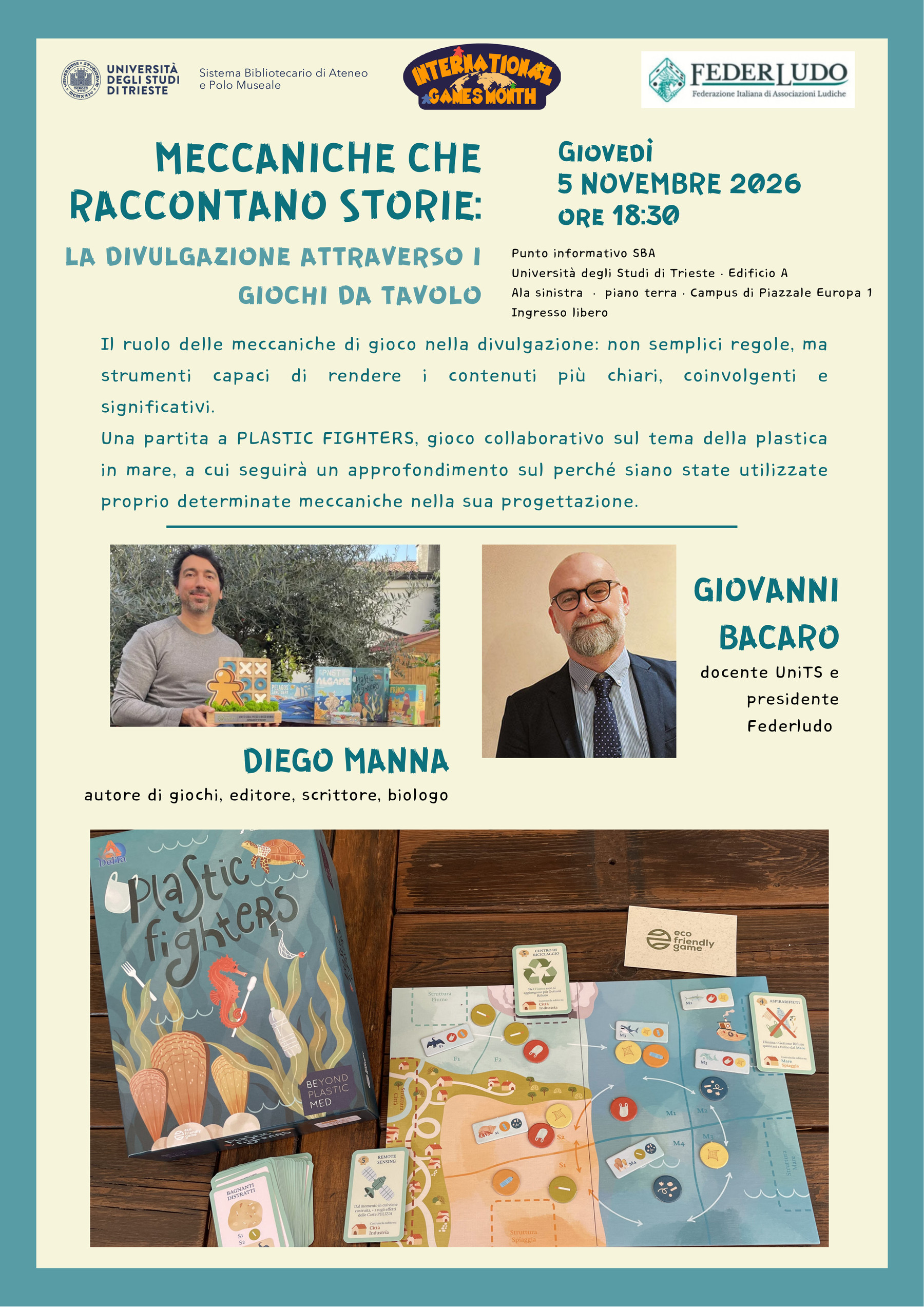
When game mechanics tell environmental stories.
On 5 November 2026, Biodiversity Lab joins the University of Trieste’s International Games Month programme to explore how a cooperative board game can turn marine plastic pollution into an experience of shared decisions, consequences and collective action.
Science communication, played rather than explained.
Meccaniche che raccontano storie: la divulgazione attraverso i giochi da tavolo is built around a simple idea: game rules are not neutral containers. They can model relationships, make trade-offs visible and allow participants to experience the consequences of individual and collective choices.
The event brings together Diego Manna — biologist, game author, publisher and writer — and Giovanni Bacaro, Associate Professor at the University of Trieste and President of Federludo. A shared game of Plastic Fighters becomes the starting point for discussing how environmental processes can be translated into accessible, engaging and scientifically meaningful game mechanics.
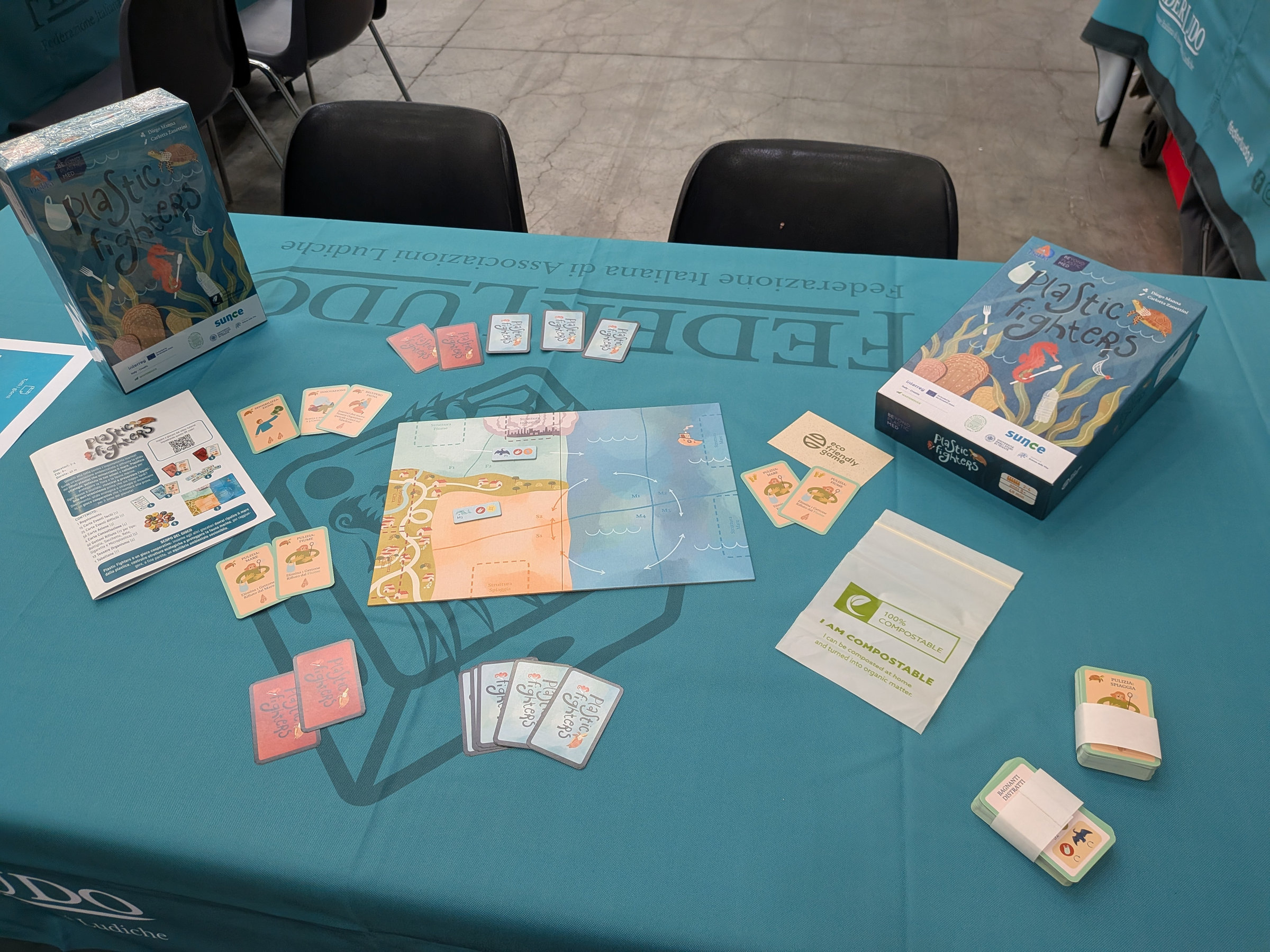
A cooperative problem needs cooperative mechanics.
Marine plastic pollution is not the result of a single isolated decision. It accumulates through multiple behaviours, flows and pressures. A cooperative game can make that systems dimension visible: participants have to coordinate, prioritise interventions and respond to a problem whose effects are distributed across the whole playing environment.
This is where game-based communication becomes particularly useful for environmental science. Instead of reducing complexity to a sequence of facts, the game lets players interact with a simplified system and reflect on why some strategies work only when they are shared.
Keeping environmental knowledge in circulation.
WASTEREDUCE concluded in July 2026 after developing integrated approaches to litter monitoring, prevention and behavioural change in protected and Natura 2000 areas across the Italy–Croatia cooperation area. Its value, however, is not limited to the formal lifetime of the project.
This outreach event extends that legacy into a different setting: the University community and the wider public. Plastic Fighters provides a bridge between research on waste, environmental awareness and the design of experiences that can support reflection, discussion and more sustainable behaviour.
Explore the WASTEREDUCE project archive ↗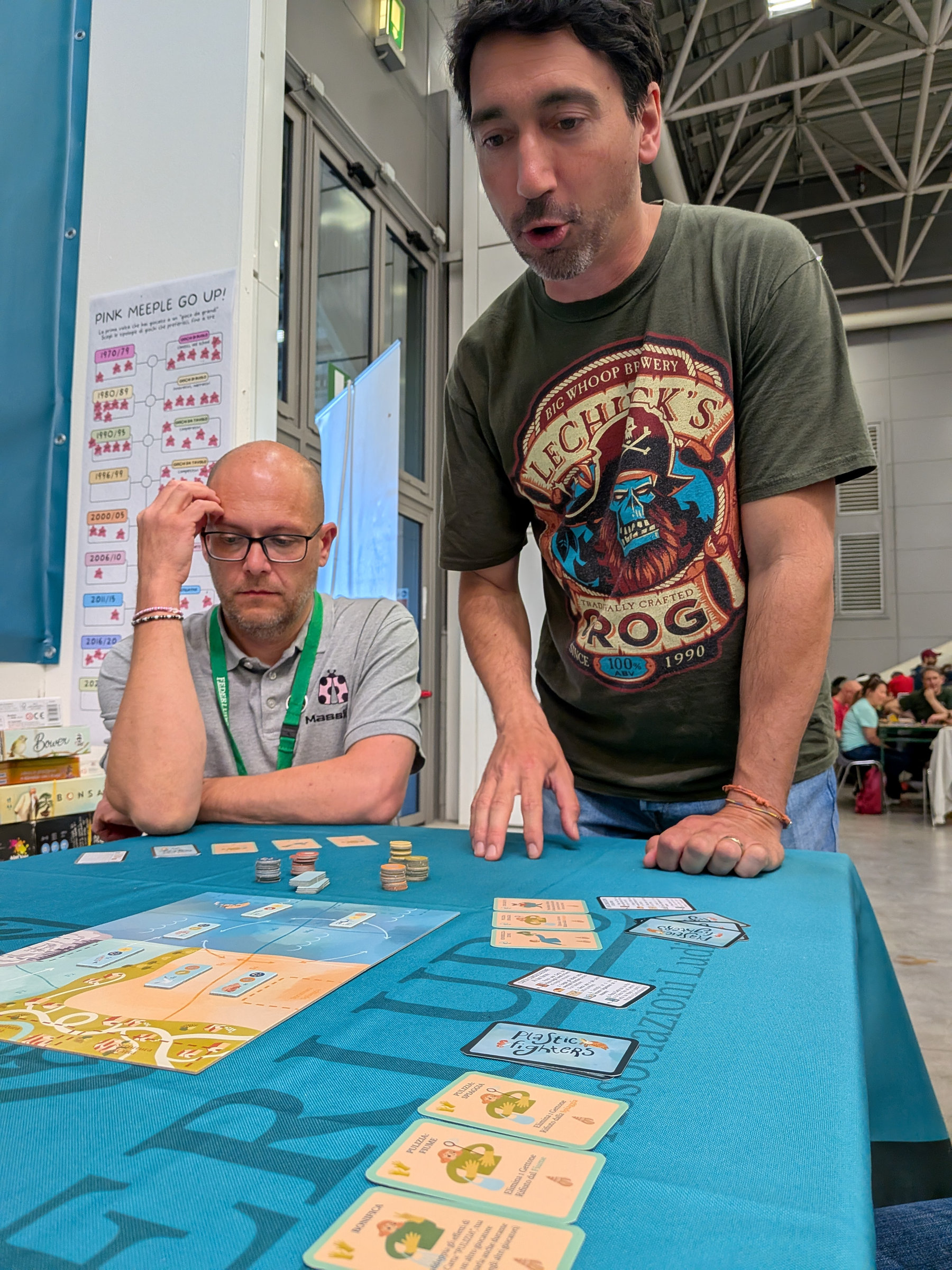
Mechanics can carry meaning.
Rules can translate flows, constraints and feedbacks into actions that players can understand by doing.
Players can see how individual decisions interact and why environmental problems rarely have isolated solutions.
The shared experience of play opens a natural transition from participation to scientific explanation and collective reflection.
Join the game.
WhenThursday 5 November 2026 · 18:30
WherePunto informativo SBA · Building A, left wing, ground floor · Piazzale Europa 1 · University of Trieste
SpeakersDiego Manna · Giovanni Bacaro
ParticipationFree entry