SPARE.
A plant. Many possibilities. A connected cross-border supply chain.
Sustainable paths for the holistic valorisation of hemp for innovative applications. SPARE joined research, farming, manufacturing and regional stakeholders in Friuli Venezia Giulia, Veneto, Carinthia and Tyrol to explore new circular value chains.
Using more of the plant. Creating value across borders.
Industrial hemp offers more than one product. Its fibres, seeds, woody core and other components can enter different manufacturing and service chains. SPARE explored how to bring those opportunities together, connecting complementary research specialisations with agriculture, small businesses and the wider cross-border territory.
Supported by Interreg Italy–Austria, the project focused on applied research, replicable circular supply-chain models, pilot experiments and prototype development, as well as the transfer of knowledge to the agricultural, industrial and service sectors.
The geographical perspective matters: production sites, manufacturing expertise, research facilities, retail activities and cultural initiatives are distributed across different regions. Connecting these actors can help identify opportunities for more integrated, resource-efficient supply chains.
From fibre to new opportunities.
SPARE brought research and prototyping together across a range of possible applications. Their feasibility and environmental performance depend on the specific process, product and lifecycle.
Cultivation & biomass
Agricultural practices, harvesting and the more complete use of hemp and its components.
Materials & manufacturing
Fibres, sustainable composites, textiles, packaging and applications for green building.
Food, cosmetics & health
Seeds, ingredients and possible applications in nutrition, personal care and related sectors.
Knowledge & territorial value
Cross-border collaboration, pilot demonstrations, geographic information, training and stakeholder engagement.
Connecting ecological expertise with geographic information.
The University of Trieste contributed scientific expertise through its Department of Life Sciences. Within this partnership, Biodiversity Lab supported the spatial dimension of the project and developed its interactive WebGIS, making the hemp supply chain more accessible to stakeholders.
Giovanni Bacaro & Biodiversity Lab
Scientific participation in SPARE with a focus on the spatial and environmental context of hemp value chains, GIS approaches and the integration of territorial information into research outputs. Other DSV research groups contributed complementary scientific expertise in hemp applications.
Our research group ↗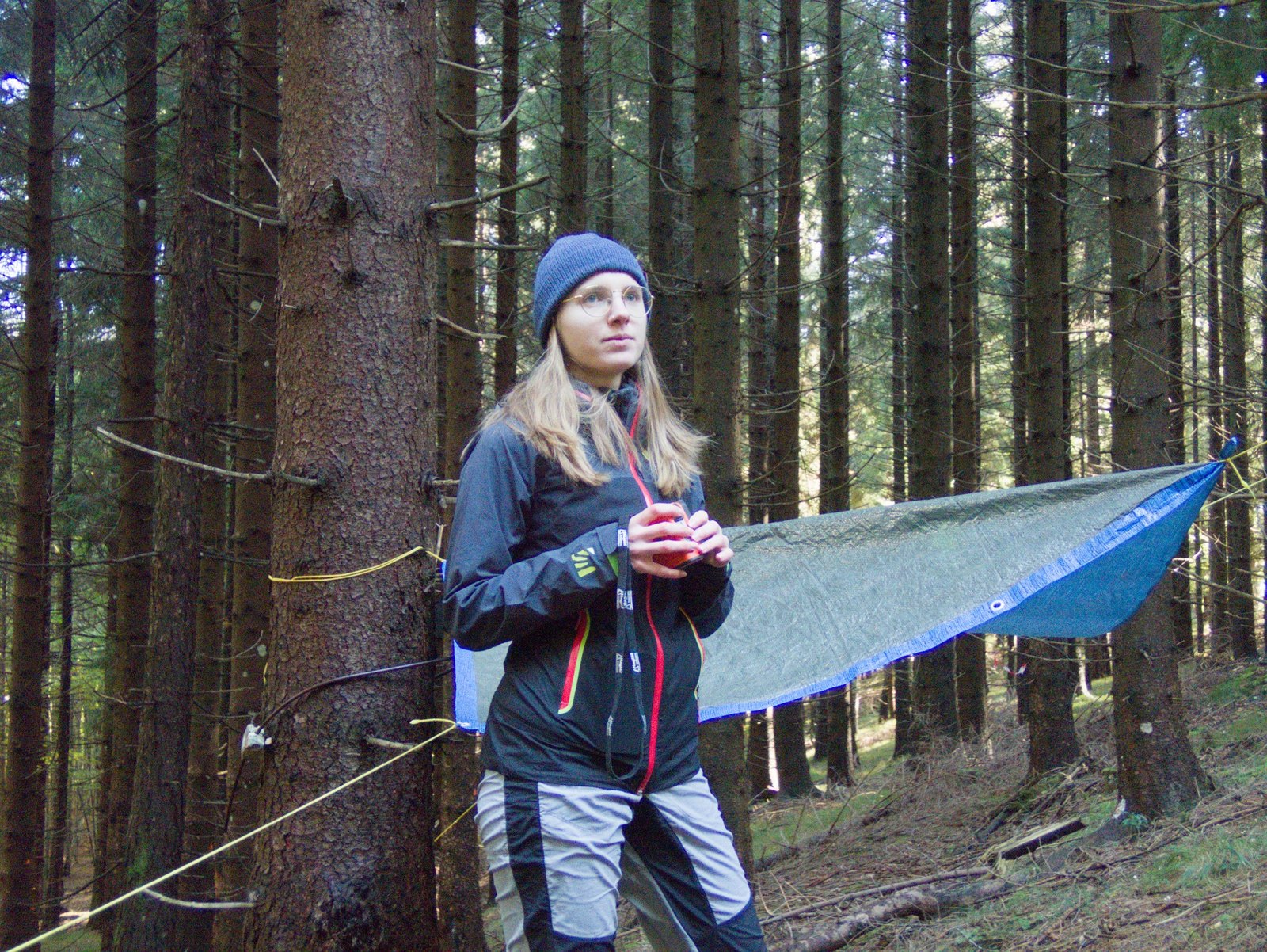
Gaia Foltran
Geospatial analysis · Interactive WebGISGaia developed the SPARE WebGIS, organising and presenting geographical information about actors and opportunities along the hemp supply chain. The map translates the project's cross-border network into a navigable resource, with thematic layers and selectable locations.
Gaia's research profile ↗Where does the hemp supply chain take shape?
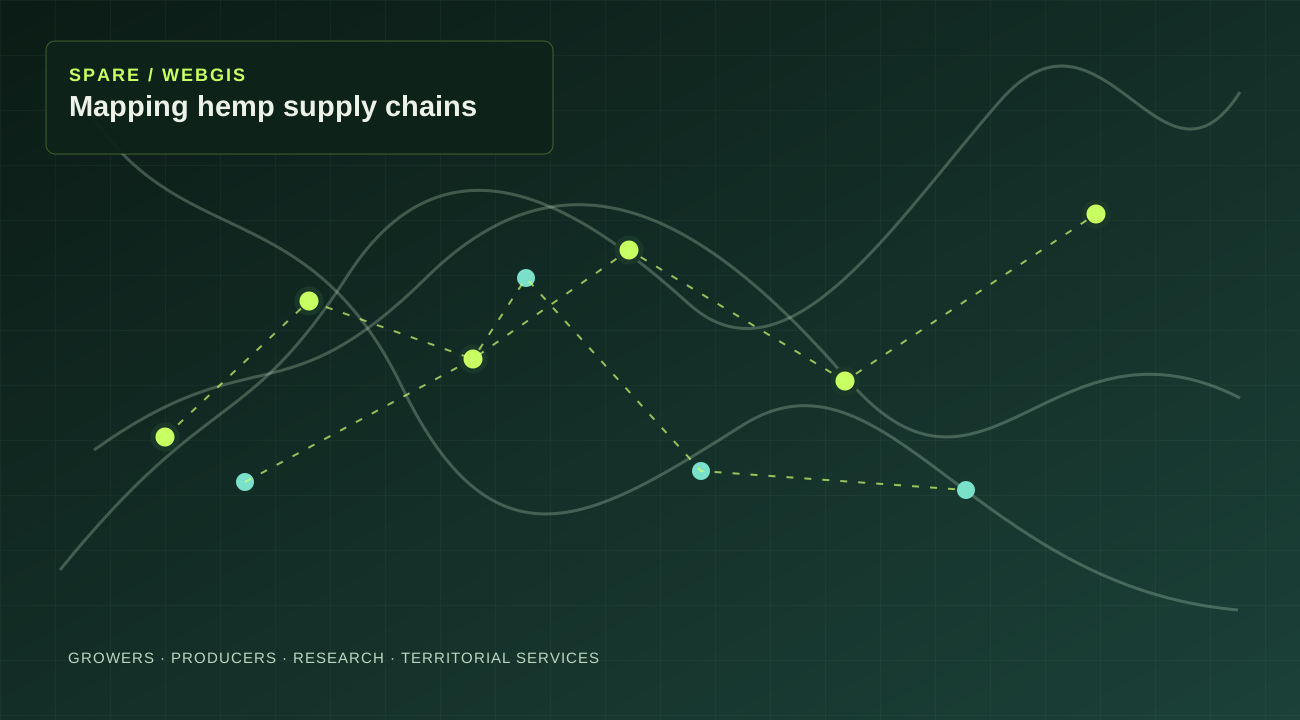
The SPARE WebGIS makes territorial information available through a multilingual interactive map. Users can explore and select mapped features and switch between thematic categories, with options for different base maps and satellite imagery.
The interactive map is hosted on the official SPARE project website. Open it in a new tab for full map controls and the latest availability.
From applied research to demonstrators.
Pilot applications
Exploratory experiments and prototypes for more complete utilisation of the hemp plant, including fibres, components and by-products.
Cross-border supply-chain models
Connecting complementary skills and enterprises to identify circular value chains suited to the participating Italian and Austrian regions.
Interactive territorial mapping
The WebGIS developed within the Trieste group brings geographic supply-chain information into an accessible public interface.
Public exhibition & dissemination
SPARE HEMP, launched at Villa de Claricini in January 2026, presented pilot outcomes and prototypes across materials, agriculture and other application sectors.
Cross-border expertise, shared innovation.
Fondazione de Claricini Dornpacher
Project coordination, agricultural context and transfer to territorial stakeholders.
Explore partner ↗Kompetenzzentrum Holz GmbH · Wood K plus
Plant-fibre and innovative bio-based materials research.
Explore partner ↗University of Innsbruck
Materials-technology research and cross-border applied innovation.
Explore partner ↗University of Trieste
Scientific research across the Department of Life Sciences; Biodiversity Lab contributed geospatial analysis and the WebGIS.
Explore partner ↗Centro Consorzi
Knowledge transfer and engagement with regional enterprises.
Explore partner ↗Canapa Meleretum S.c.a.r.l. · Fondazione Agrifood & Bioeconomy FVG · Norischer HANF Mittelkärnten · Standortagentur Tirol
Research, the map and the wider network.
Explore the programme, the interactive geographic output and the official project communications. The source project dates and financial figures above follow the published SPARE project website.